

Unauthorised access to business systems
With a valid address and password an attacker can log in without any technical hack. To your security systems it looks exactly like a normal session.
Right now there are billions of leaked logins on the dark web. Email addresses, passwords, usernames, taken from hundreds of breached platforms around the world. From large services such as LinkedIn and Adobe to small web shops and forums.
The chance that at least one email address or password from your company sits in those databases is statistically significant, certainly if your company has been around a few years and people use their work address for other services too.
The problem: you do not know. Unless someone tells you. Or unless an attacker has already used it to get into your systems.
We monitor continuously whether your business logins appear in new breaches. The moment that happens you get an alert with concrete instructions on what to do. No technical jargon. No needless alarm. Only what you need, at the moment it matters.
Leaked credentials
The dark web is not somewhere you simply look up through Google. It is a shielded part of the internet reachable only with special software, where stolen data is traded out of sight of ordinary search engines and authorities.
New breaches appear daily. Sometimes millions of records at once from a large platform that was hacked. Sometimes a targeted sale of credentials from a specific sector or company.
Keeping track manually is not realistic for a business owner. A one-off check gives you a snapshot at best: it does not look proactively, not continuously, and not across every variant of your business domains and addresses.
We do. Automatically, continuously, for every email address and domain of your company.
The consequences
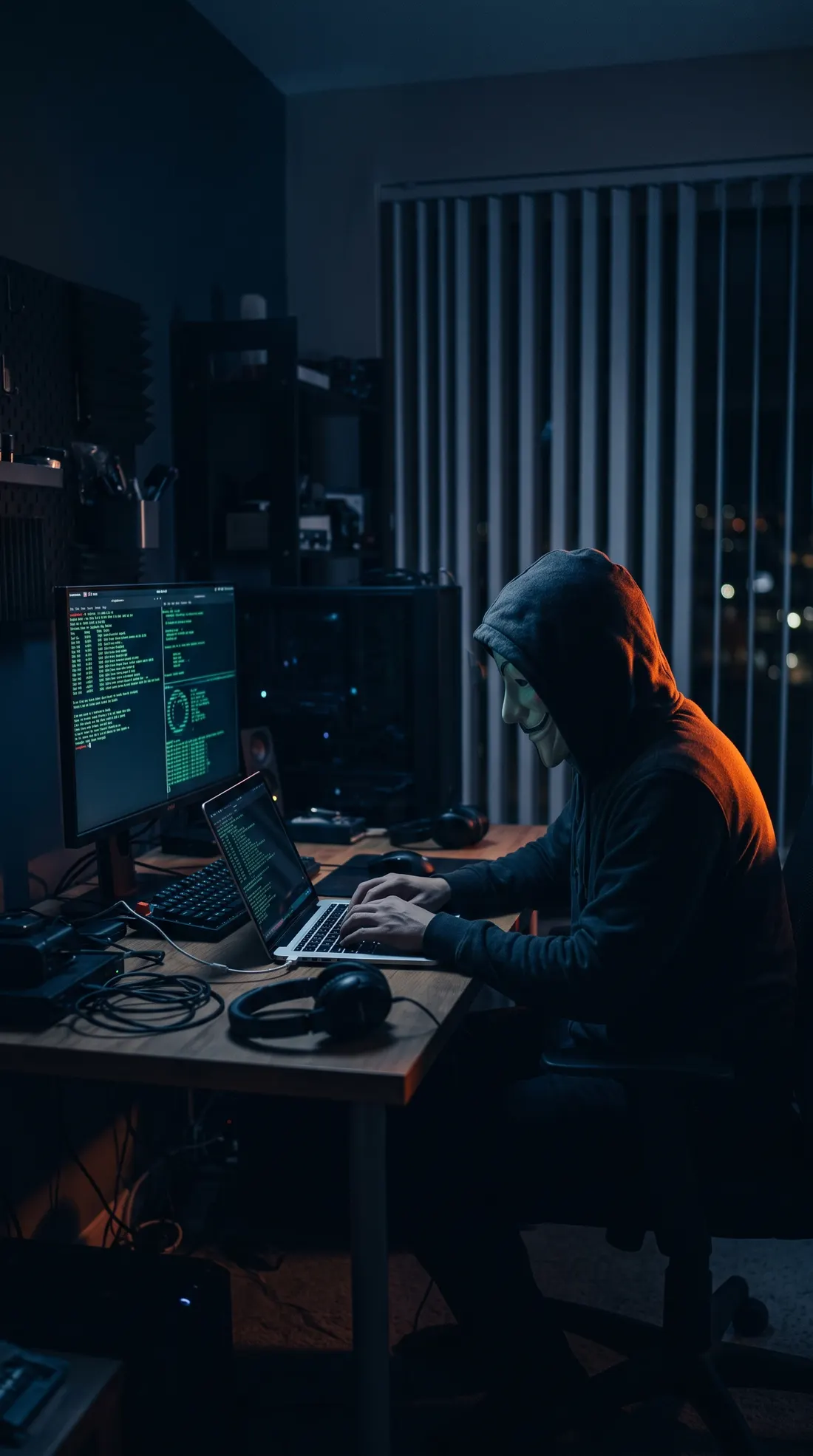
A leaked password nobody spots is an open door nobody knows about. Attackers who buy leaked credentials try them automatically across dozens of platforms, business systems, cloud storage and email accounts included.
With a valid address and password an attacker can log in without any technical hack. To your security systems it looks exactly like a normal session.
Access to email or business software opens up confidential correspondence, customer records and financial information. That data can be stolen, sold or used for further attacks.
One compromised account is often the first step towards ransomware on the company network. The average damage from a ransomware attack on a smaller company runs into tens of thousands of euros, if recovery is possible at all.
If personal data of customers or staff was accessed or stolen through a compromised account, you are legally obliged to report the breach to the data protection authority within 72 hours. Early detection makes both the damage and that report considerably smaller.
Leaked password monitoring is relevant for almost any company that is active online.
Companies whose people use business email addresses
Companies working with online tools, software or customer portals
Companies that process personal data and fall under the GDPR
Companies that already had a security incident and want to avoid a repeat
Companies that simply want to know whether their data has already leaked
Almost any company with more than one employee and a business email domain
Our approach
01
We connect your business domain and its email addresses to our monitoring service. The moment an address or password shows up in a new breach, however large or small, we get the signal immediately.
02
You get a clear alert: which address was affected, which breach it was found in and what data leaked. Not a technical report to decipher, but concrete information and a clear set of steps.
03
Not every leak is equally urgent. A leaked password from a forum account carries a different risk than one that may also be used at work. We assess the severity and give instructions that fit the situation.
04
At the outset we run a full historic scan. That shows you immediately what is already known about your domain in existing breach databases, so you can act on data that leaked earlier.
05
You receive a clear monthly report: which addresses were monitored, which hits were found, which actions were taken and where things stand. Full insight without having to go looking.
What's at stake?
No technical jargon, just situations every business owner recognises.
Without monitoring for leaked passwords
Your office manager uses the same password for LinkedIn as for the accounting software. Two years ago LinkedIn had a breach. The credentials have been circulating on the dark web ever since. A criminal logs into the accounting software, sets up automatic forwarding of all email and reads along for months. Only an internal audit brings it to light. Quotes, customer records and financial information have all been seen.
The damage
What would have prevented this?
Orange Warriors monitors continuously whether your email addresses and passwords appear on the dark web. On a hit you are alerted immediately, so you can change the password before it is abused.
FAQ
Without monitoring you do not. At the start we run a historic scan that shows immediately what is already known about your domain. After that we monitor continuously for new breaches, and your customer portal shows at any moment whether anything has been found.
You get an immediate alert with the details of the breach and a concrete set of steps: which passwords to change, which accounts to protect further, and whether a formal report is required. We support you through the follow-up.
We monitor the business domains and email addresses you specify. Personal addresses are not included unless they are explicitly added.
No. Antivirus protects devices against malware. Dark web monitoring looks outside your own systems, at databases of stolen credentials circulating on the dark web. Those are two fundamentally different layers of protection.
As soon as a new breach is processed in our monitoring databases and matches your data, you get an alert. In practice that usually means within 24 to 48 hours of a new breach being published.
Free dark web scan
Monitoring and prevention reinforce each other. Monitoring tells you when a password has leaked. A password manager makes sure every account has a unique one, so a single leak never opens other doors.
We offer both as part of a complete security package. Read more about our business password manager.
We run a free historic scan and tell you within 24 hours whether business data from your company has already leaked, and what to do about it.